
The Truth Behind America’s Hemp Ban
Uncover how shifting regulations, industry pressure, and inconsistent policies are reshaping the U.S. hemp market.
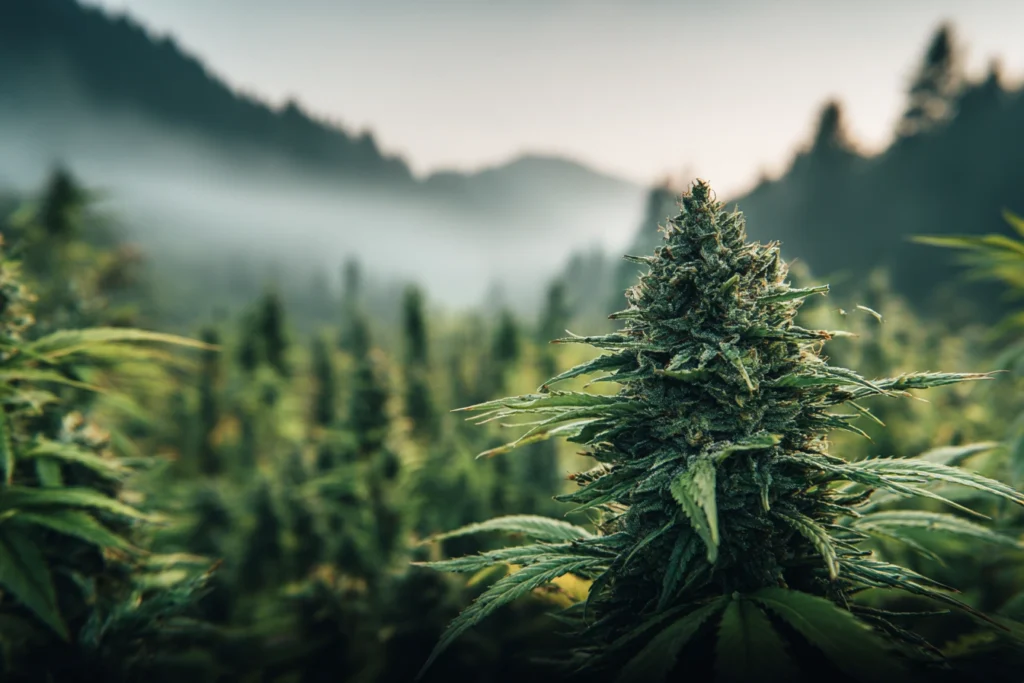
Table of Contents:
Why Hemp Is Under Pressure
How Hemp Became Legal
The Rise of the “Hemp Ban”
FDA Delays and CBD Confusion
DEA Rules and Enforcement
Impact on Farmers and the CBD Market
Industry Influence and Lobbying Pressure
What’s Next for Hemp in America

Edibles

Flower
Pre-Rolls
In recent months, hemp has found itself at the center of a new debate in the United States. While hemp has been legal for cultivation under federal law since the 2018 Farm Bill, a series of actions and regulatory changes have caused confusion and concern among hemp farmers, manufacturers, and consumers alike. This growing uncertainty centers on a de facto “hemp ban” that is quickly making waves across the industry. The regulations, or lack thereof, surrounding hemp production and distribution are raising significant questions about the future of one of the most versatile plants known to man.
What is Hemp, and Why Was It Legalized?
Hemp is a variety of the Cannabis sativa plant that contains less than 0.3% THC (tetrahydrocannabinol), the psychoactive compound that causes the “high” associated with marijuana. Hemp is used in a variety of industries, from textiles to construction materials, and most notably, in the production of CBD (cannabidiol), a non-intoxicating compound popular in wellness products.
The 2018 Farm Bill legalized hemp production nationwide, removing it from the list of controlled substances. This legalization was hailed as a major victory for American farmers and businesses, as hemp could now be cultivated for various commercial uses. The market quickly exploded, with the U.S. becoming one of the largest producers of hemp-based products in the world. In 2019 alone, the U.S. hemp industry was valued at over $5 billion, and it was projected to reach $26.6 billion by 2025.
The Emergence of the Hemp Ban
Despite the federal legalization of hemp in 2018, the hemp industry has faced mounting challenges in recent years. One of the most significant issues is the lack of uniform regulatory standards and the slow pace of implementation at both the federal and state levels. States have been left to develop their own regulatory frameworks, and this has created confusion and inconsistency across the country.
In 2023, a series of actions by the U.S. Food and Drug Administration (FDA) and the Drug Enforcement Administration (DEA) have raised concerns that hemp’s legal status is being undermined. These agencies have taken steps that some have interpreted as signaling a potential “hemp ban” or a severe restriction on the plant’s production and use.
The FDA’s Hesitation on CBD Regulation
One of the key drivers behind this new hemp ban controversy is the FDA’s slow and inconsistent approach to regulating CBD. While CBD products have flooded the market, the FDA has not yet issued clear guidelines on their safety, labeling, or approval for use as dietary supplements. This regulatory vacuum has left businesses in a precarious position, as they must navigate an uncertain legal landscape.
In 2023, the FDA issued a statement that it would be “re-evaluating” its stance on CBD, particularly in food and beverage products. While the agency has not explicitly banned CBD, its hesitation to regulate it has had a chilling effect on the hemp market. For example, states like New York and California, which were initially hotbeds for hemp and CBD products, have imposed stricter regulations on the sale of hemp-derived goods, particularly those aimed at children or marketed as health supplements.
The DEA’s Role in the Hemp Ban Controversy
The DEA has also played a role in this growing hemp controversy. While the agency initially seemed to accept the 2018 Farm Bill’s legalization of hemp, it has since issued a series of guidelines that limit how hemp can be transported and processed. In 2022, the DEA reaffirmed that any hemp-derived product containing THC, even in trace amounts, is still considered a controlled substance under the Controlled Substances Act (CSA). This has led to confusion, as many hemp-derived products, including CBD oils, edibles, and tinctures, may contain minute levels of THC (below the 0.3% threshold), but still face scrutiny.
This stance by the DEA has made some hemp farmers and businesses nervous about their legal standing. The agency has also been cracking down on “delta-8 THC,” a synthetic cannabinoid that can be derived from hemp. Delta-8, while legal in many states, has been banned in some regions due to concerns about its safety and the fact that it can be processed into a psychoactive substance. These regulatory ambiguities have led to widespread uncertainty within the hemp market.
Economic Impacts on Hemp Farmers and Businesses
The hemp industry’s rapid growth has made it a vital part of the U.S. agricultural economy. In 2019, over 78,000 acres of hemp were cultivated across the U.S., with many states, such as Kentucky, Colorado, and Oregon, becoming major producers. However, with the emergence of new regulations and uncertainty, farmers have found themselves struggling.
The cost of compliance with state and federal regulations has skyrocketed, making it difficult for small-scale farmers to remain competitive. In addition, some hemp farmers have been unable to sell their crops due to market oversaturation and lack of demand for low-THC products.
One of the biggest challenges faced by hemp farmers is the risk of crops testing above the 0.3% THC threshold, which would render them illegal. This has led to what some have called the “hemp doom loop,” where farmers must destroy their crops if they fail testing, resulting in significant financial losses.
The Impact on the CBD Market
The CBD market, which is heavily reliant on hemp, has also taken a hit. The lack of clear regulatory standards and the uncertain legal landscape have caused many companies to scale back or close their operations altogether. In 2023, the CBD market saw a significant drop in sales, as consumers became wary of products that were potentially unsafe or non-compliant with local regulations.
Disruption in the Hemp Supply Chain
Another ripple effect of the hemp ban is the disruption to the hemp supply chain. The processing of hemp into various products, such as CBD oil, clothing, and building materials, has been increasingly difficult as raw hemp is harder to source. Moreover, suppliers of hemp-based products are now facing a shortage of key ingredients due to restrictions on cross-state transport.
Legal and Political Backlash
The so-called hemp ban has led to a rising backlash from various advocacy groups, lawmakers, and even state governments. Critics argue that the federal government’s lack of clear regulation and the FDA’s reluctance to approve CBD products for mainstream use have effectively stifled what could be a booming industry.
In response, hemp advocates have begun pushing for new legislation to clarify the legal status of hemp products and create a more consistent framework for the industry. These groups argue that hemp has vast potential to create jobs, bolster sustainable agriculture, and contribute to the U.S. economy. The Industrial Hemp Farming Act, introduced in 2023, is one example of such legislation aimed at promoting the growth of the hemp industry and ensuring that regulations are clear and consistent.
Alcohol Lobbyists and Their Influence on the Hemp Ban
One of the driving forces behind the growing regulatory push against hemp in the U.S. seems to be the influence of alcohol industry lobbyists. As the hemp and CBD markets have exploded in recent years, traditional alcohol companies have started to see them as a direct threat. With the rise of CBD-infused beverages and other hemp-based alternatives to alcohol, major players in the booze industry are concerned that hemp could cut into their profits. Some alcohol companies have even begun exploring cannabis-infused drinks, but at the same time, they’re pressuring lawmakers to slow down the growth of the hemp industry. According to Forbes, large alcohol brands have been quietly working behind the scenes to limit the availability of hemp products by funding lobbyists who push for stricter regulations. These lobbyists, often tied to the alcohol sector, have been instrumental in shaping policy debates around hemp, influencing lawmakers to take a cautious or even restrictive approach to its regulation (Forbes, 2023).
Alcohol lobbyists aren’t just sitting on the sidelines—they’ve been actively campaigning against the expansion of hemp, particularly in areas like CBD and THC-infused beverages. Groups like the Wine & Spirits Wholesalers of America (WSWA) have been at the forefront of efforts to tighten restrictions on hemp-derived products. In 2023, WSWA ramped up its lobbying efforts, arguing that the lack of federal oversight on hemp creates a “chaotic” marketplace that could undermine consumer safety. However, many hemp advocates see this as a thinly veiled attempt to protect alcohol’s dominance in the market. By influencing lawmakers with substantial campaign contributions and lobbying dollars, these groups are trying to keep hemp out of mainstream distribution channels—effectively stalling the growth of the hemp industry and allowing alcohol to maintain its stronghold (Hemp Industry Daily, 2023).
Frequently Asked Questions:
What is causing the hemp ban concerns in the U.S.?
Confusing federal rules and inconsistent state policies are creating major uncertainty for hemp businesses.
Why hasn’t the FDA clarified CBD regulations yet?
The FDA is still reviewing safety data and has not created a clear path for CBD in food, drinks, or supplements.
How are farmers being affected by these changes?
Farmers face higher testing costs, stricter compliance, and the risk of losing crops that test above legal THC limits.
Are other industries influencing hemp policy?
Yes. Competing industries are increasing lobbying efforts that push for tighter rules on hemp products.
What would help stabilize the hemp industry?
Clear federal standards and updated CBD regulations would reduce uncertainty and support industry growth.
A Fork in the Road for Hemp in America
The hemp industry is facing a critical moment. While the plant’s legalization in 2018 opened the door to a wide range of commercial possibilities, new regulations and uncertainties are causing many to question whether the U.S. hemp industry will be allowed to reach its full potential. The so-called hemp ban is not necessarily a formal prohibition, but a series of confusing and restrictive measures that have made it harder for businesses to operate and for consumers to access products.
Ultimately, the fate of hemp in America may depend on how lawmakers and regulators handle this complex issue in the coming years. As the legal landscape continues to evolve, the hemp industry will need to find ways to adapt to new regulations, while pushing for clarity and consistency at the federal level. Whether the U.S. can overcome this uncertainty and fully realize hemp’s potential remains to be seen, but one thing is clear: the hemp story is far from over.
Sources:
- National Hemp Association. “U.S. Hemp Industry Impact Report 2023”. National Hemp Association.
- FDA. “FDA Updates on CBD Regulation”. FDA.
- S. Department of Agriculture (USDA). “Annual Hemp Report 2023”. USDA.
- “The Battle Over Delta-8 THC and Hemp: DEA’s Role in the Industry.” Hemp Industry Daily, 2023.
- Leafly. “How FDA and DEA Regulations Are Impacting the Hemp Industry.” Leafly.
- Forbes. “The Cannabis Industry Is Fighting A Powerful Lobby That Fears Competition From Hemp.” Forbes, 2023. Link to article.
- Hemp Industry Daily. “Alcohol Industry Steps Up Lobbying Efforts to Curb Hemp Growth.” Hemp Industry Daily, 2023. Link to article.
- Wine & Spirits Wholesalers of America (WSWA). “2023 Policy and Legislative Priorities.” WSWA, 2023. Link to article.